
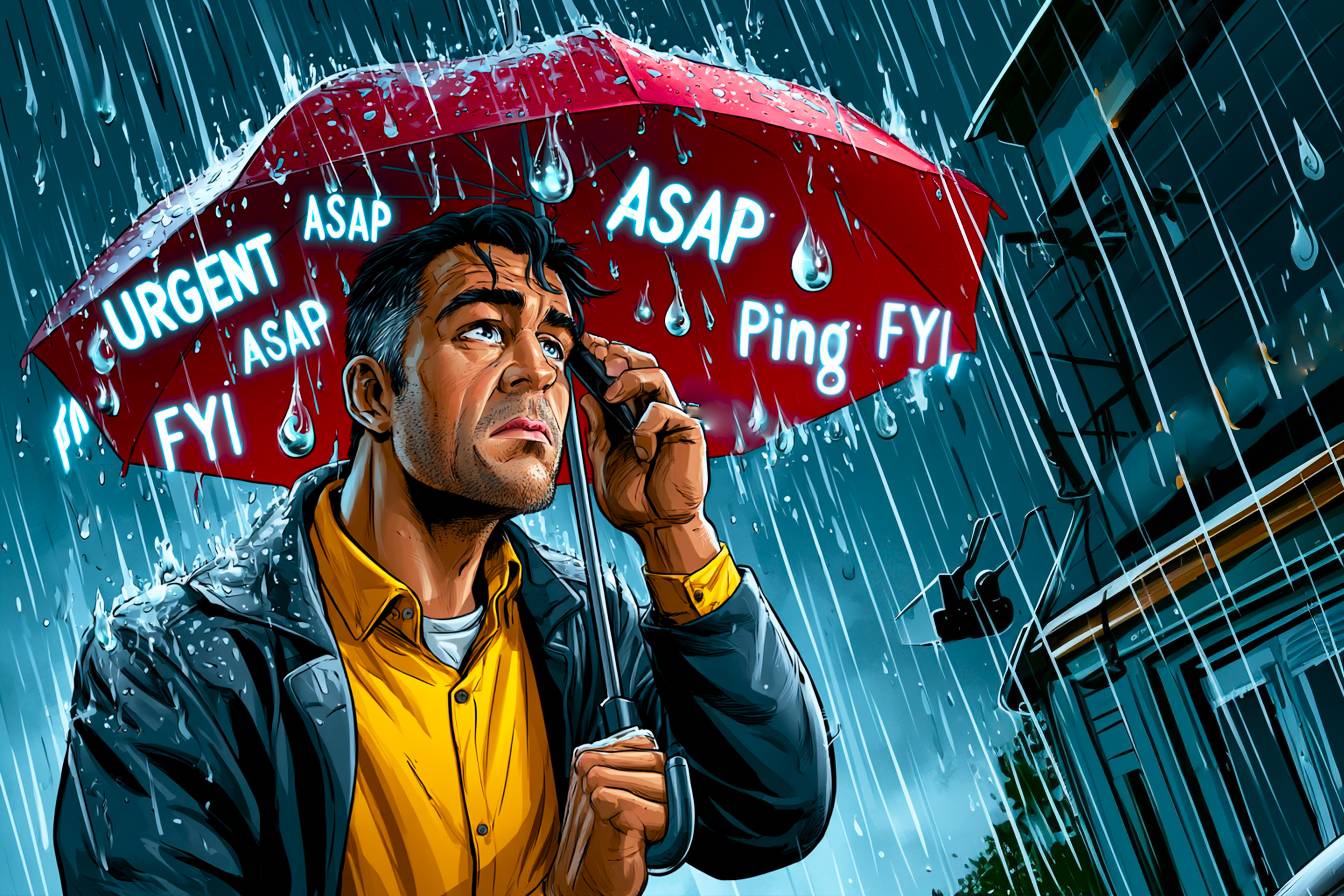
I was wrong about AI efficiency. Most of us were. Because instead of eliminating bottlenecks, AI moves them from the machine to the human. And THAT, is a harder problem to solve.
Forget about AI stealing our jobs, we need to talk about how AI is flooding us with outputs faster than we can process them. How a swarm of AI agents is splintering our attention across a hundred directions while mindlessly saying, “If you’d like, I can…” What, Claude? Add more to our pile? No thank you. The irony is some of us are now drowning in “solutions”.

This is the human capacity problem not enough people are trying to solve.
Pressure. Exhaustion. Frustration. That’s what people are feeling. It’s what people are swallowing when every alert feels important and nothing is prioritized. When organizations celebrate speed over everything.
This is the new AI burnout. And it’s on top of waking up to 40 Slack pings, 33 email threads, and a meeting cadence that leaves zero room to think. It’s too much.
What do you do when every message says, “urgent” and none of them say, “ignore this one”? Spend your days firefighting? Use your nights to catch up on the work that actually does move the needle? This is where AI rollouts have brought us. Or rather, the rollouts that weren’t designed with a rhythm that matched human capacity. No wonder the work doesn’t feel sustainable.
Pressure. Exhaustion. Frustration. Now add to that the loneliness of being the human in the loop who has to catch what the machine misses — sometimes after many of their colleagues have been let go. This can cause cognitive paralysis. Or even worse, apathy and disengagement.
I don’t think the fix is more tools. It’s fewer decisions , and telling your teams: this matters now, this matters next, this doesn’t matter at all.
It’s communicating in ways that avoid change fatigue from tech and AI burnout. Too many leaders are skipping this part and it shows. Because it was all fun and revenue gains until the machine became the easy part and the humans became the “problem”. Now, we’re living in a reality where the cognitive ability of management is in shambles. The very AI that was supposed to offer their teams relief is tightening their shoulders and adding new creases to their foreheads.
But there is a solution.
Earlier, I mentioned better communication. That’s the first lever. And by that, I mean listening to what’s being said and what’s not being said before sending a memo or giving a talk. It means tailoring your messages to the room vs. broadcasting them company-wide.
Good communication also means honest resource planning. Calculate the human review hours and build that into your resourcing plan before deploying any AI acceleration, because if you don’t, what they’re hearing is “your capacity doesn’t matter” – and that’s never good. Speed has a human spirit cost and it’s simply too high. Without taking care of the humans involved, everything becomes soulless and superficial and is no longer worth it at all.